Rec Center
What Happens in the Rooms That Aren't the Gymnasium
TL;DR:
The tournament series focused on what the gymnasium hosts: basketball, volleyball, wrestling, futsal, cheerleading, dodgeball. But a recreation center is not just a gym. The multipurpose rooms, event spaces, and flexible-use areas on the other side of the building serve a completely different set of needs for a completely different set of people, and they do it every day of the week. A senior tai chi class on Monday morning. A youth martial arts session on Wednesday afternoon. Table tennis on Tuesday evening. A birthday party on Saturday. A church group on Sunday. A corporate wellness workshop on Thursday. Same rooms, different community, every single day.
Every blog in the tournament series told the story of the gymnasium. Basketball. Volleyball. Pickleball. Wrestling. Futsal. Cheerleading. Dodgeball. The gymnasium is the centerpiece of the proposed Twin Falls recreation center, and the case for what it hosts is strong.
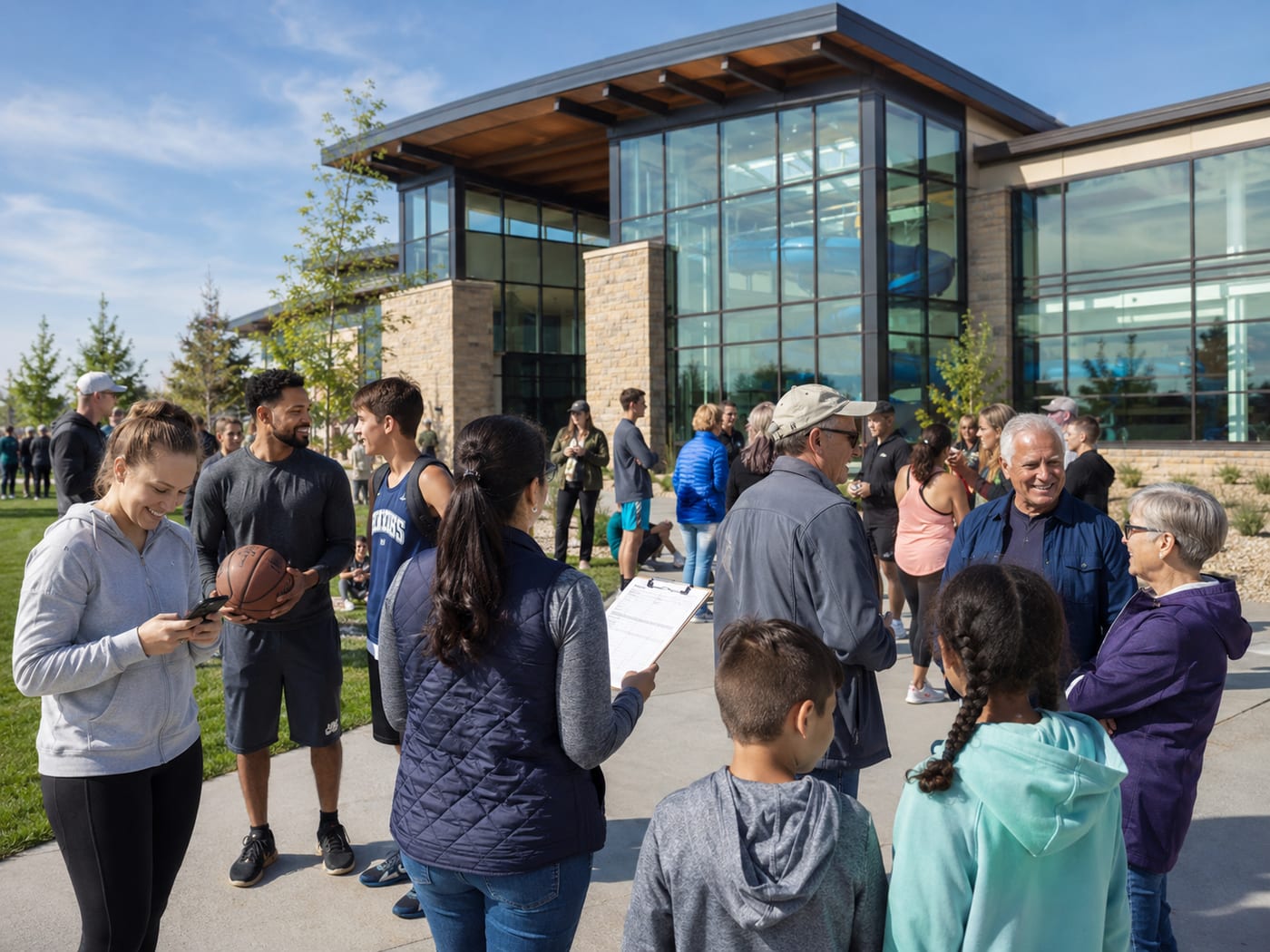
But walk past the gymnasium doors and down the hallway, and you reach the spaces that most residents will actually use more often than the courts. The multipurpose rooms. The event spaces. The flexible-use areas where the building stops being a sports facility and starts being a community center.
These rooms do not host tournaments. They host life.
Monday, 9:00 a.m.: Senior tai chi
The first people to use the multipurpose room on a Monday morning are not athletes. They are retirees.
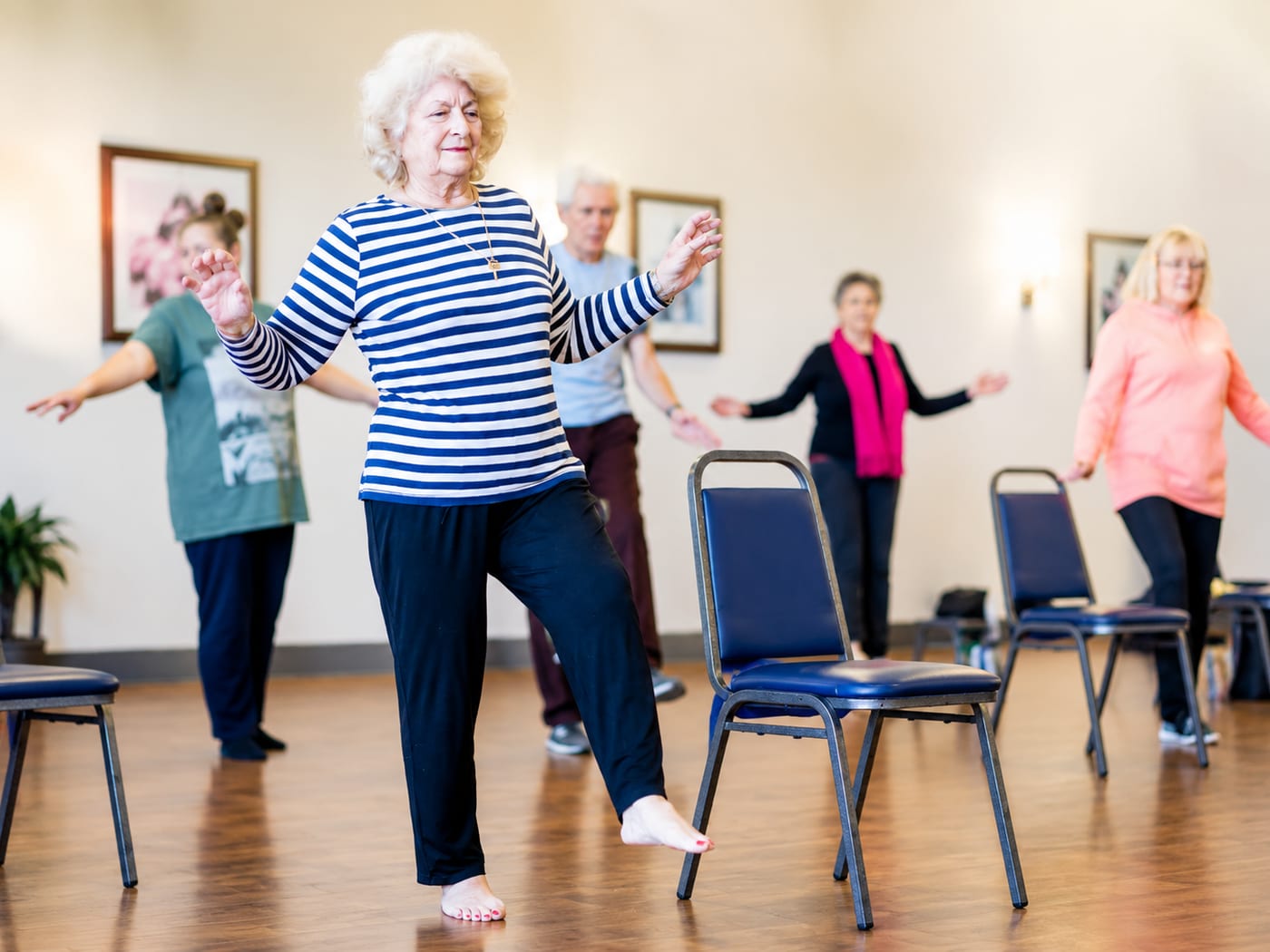
Eight women and three men, most in their late 60s and 70s, stand barefoot on a wood floor between folding chairs. A certified instructor leads them through a tai chi sequence focused on balance, weight shifting, and controlled breathing. The chairs are there for support. Some participants use them. Some do not. All of them are doing the kind of structured, evidence-based movement that reduces fall risk, chronic disease, and social isolation among older adults.
This class meets three mornings a week. The participants know each other by name. They notice when someone is absent. That consistency and social accountability is what the research identifies as the difference between programming that works and programming that does not. It is not the exercise alone that improves outcomes. It is the exercise plus the human connection plus the routine.
After class, a few of them stay for coffee in the lobby. They will be back Wednesday.
Twin Falls currently has no public facility offering this kind of programming. The Senior Center on Shoshone Street serves an important social function, but it was not designed as a wellness facility with the space, staffing, and programming infrastructure to deliver structured fitness classes at scale. A recreation center multipurpose room is.
Monday, 4:30 p.m.: Youth martial arts
The tai chi class cleared out hours ago. The same room has been swept, the chairs folded and stored against the wall, and mats rolled out across the floor.
Twelve kids between 7 and 11 are learning basic judo throws from a certified instructor. The youth martial arts blog made the case for why this programming matters: martial arts is the activity parents most consistently associate with building discipline, confidence, and focus in children, and the largest age group in martial arts nationally is 7 to 12 year olds.
At a recreation center, a six-week martial arts session costs $30 to $60. At a private studio, the same instruction costs $100 to $300 per month. The multipurpose room makes the affordable version possible.
By 5:30, the mats are rolled up. The room is empty. It will be set up differently tomorrow.
Tuesday, 7:00 p.m.: Table tennis open play
Four table tennis tables unfold from storage and set up in under ten minutes. Portable nets clamp on. Paddles and balls come out of a bin.
Fourteen people show up for open play. A 17-year-old plays a 68-year-old and loses. A husband and wife take on a pair of coworkers in doubles. A man who moved to Twin Falls six months ago and does not know many people yet finds a playing partner within five minutes.
The table tennis blog made the case that this is the only sport in the building that operates entirely outside the gymnasium. That is its superpower for facility utilization. While the gym hosts a basketball league on Tuesday evenings, the multipurpose room hosts table tennis. Two communities, two spaces, zero conflict.
By 9:00 p.m., the tables fold and store. The room is clear.
Wednesday, 6:30 p.m.: Church youth group
A local church has rented the multipurpose room for its Wednesday evening youth group meeting. Thirty teenagers and four adult leaders fill the space. Folding chairs are arranged in a circle for the first half. The second half is active games and group activities.
The church does not have a fellowship hall large enough for this group. Its own building works for Sunday services but not for midweek programming that needs open floor space and room to move. A recreation center multipurpose room, available for evening rental at a modest hourly rate, solves that problem without the church needing to build anything.
This is facility rental revenue. It is modest per event, but it recurs weekly for 40 weeks a year. Multiply it across the churches, nonprofits, scout troops, and civic groups in the Magic Valley who need affordable gathering space, and the rental calendar fills itself.
Thursday, 12:00 p.m.: Corporate wellness workshop
A Twin Falls employer has booked the multipurpose room for a two-hour lunchtime wellness workshop. A local nutritionist leads a session on meal planning for busy professionals. Twenty-two employees attend. The company pays a facility rental fee and the presenter's honorarium.
Corporate wellness is a growing sector. Employers in mid-sized cities increasingly look for off-site venues to host health screenings, team-building activities, and professional development events. A recreation center multipurpose room with tables, chairs, a projector hookup, and proximity to a fitness center is exactly what they need. For a city trying to position itself as a place where businesses want to operate, having this kind of community infrastructure matters for workforce attraction.
Thursday, 6:00 p.m.: Dance class
The chairs and tables from the wellness workshop are cleared. The floor is open. A hip-hop dance class for teens runs from 6:00 to 7:00. A beginner adult social dance class follows from 7:15 to 8:15.
Dance programming is one of the most consistent revenue generators in recreation center multipurpose rooms. The format requires nothing but open floor space and a sound system. It serves demographics that court sports do not always reach: teenage girls looking for movement outside of competitive athletics, adult women interested in fitness that feels like fun rather than exercise, and couples looking for a weeknight activity together.
After the cheerleading blog made the case for performance athletics, dance classes represent the recreational version: no competition, no travel, just movement and music in a room designed for it.
Friday, 5:00 p.m.: Birthday party
A family has rented the multipurpose room for their 8-year-old's birthday party. Fifteen kids, pizza, cake, balloons, and two hours of contained chaos. The parents paid a modest rental fee that includes use of the room, tables, and chairs. Some facilities offer add-on packages: a supervised hour in the gymnasium for games, a group swim session, or climbing wall access.
Birthday parties are a surprisingly significant revenue category for recreation centers. They fill weekend afternoon hours when the multipurpose rooms would otherwise sit empty. They introduce families to the building who might not have visited otherwise. And they are one of the simplest, most repeatable rental bookings a facility can offer.
A parent who rents the room for a birthday party in March notices the summer camp flyer on the bulletin board. A grandparent who attends a party sees the senior fitness class schedule posted near the entrance. The building cross-sells itself just by being used.
Saturday, 8:00 a.m.: Community health fair
A local nonprofit has organized a community health fair in the multipurpose room and adjacent lobby space. Tables are set up for blood pressure screenings, dental health information, nutrition counseling, and sign-ups for community wellness programs. A physical therapist demonstrates fall prevention exercises. The adaptive recreation information table is staffed by a volunteer explaining what the rec center offers for residents with disabilities.
Health fairs are community events that serve populations who might never walk into a recreation center for a workout. They reach seniors, low-income families, and people managing chronic conditions. They connect residents with local health providers. And they position the recreation center as part of the community's health infrastructure, not just its sports infrastructure.
Saturday, 2:00 p.m.: Quinceañera
The health fair cleared out at noon. The room has been cleaned, tables rearranged, and decorations put up by a family celebrating their daughter's fifteenth birthday. Sixty guests will arrive at 2:00. The room holds them comfortably. The rental fee covers the space for five hours.
Twin Falls has a growing and culturally diverse population. For families who need affordable event space for milestone celebrations, the options in Twin Falls are limited: restaurant back rooms, church halls, or expensive private venues. A recreation center multipurpose room offers a clean, accessible, appropriately sized space at a fraction of the cost of a private event venue.
This is the same cultural inclusion argument the futsal blog made through sport. The multipurpose room makes it through celebration.
Sunday, 10:00 a.m.: Community meeting
A neighborhood association has booked the room for its quarterly meeting. Thirty residents sit in folding chairs. The agenda includes a parks update, a school bond discussion, and a presentation from the city's planning department. The rental fee is waived for civic use, a common policy at public recreation centers.
Community meetings need space. In Twin Falls, they currently happen in library conference rooms (small), school cafeterias (inconsistent availability), and church basements (not always neutral ground). A recreation center multipurpose room provides a publicly owned, ADA-accessible, centrally located, and intentionally neutral space for civic life.
This is the "third place" function the first blog in this series described: a gathering space that is neither home nor work, where community happens.
What the gymnasium cannot do
The gymnasium is the rec center's showpiece. It hosts tournaments, leagues, open play, and the events that generate the biggest economic impact. But it cannot host a tai chi class for eleven seniors, a birthday party for fifteen kids, a church youth group of thirty teenagers, a corporate wellness workshop, a table tennis night, a dance class, a health fair, and a quinceañera, all in the same week, all without conflicting with a single basketball game.
The multipurpose rooms can. And they do, at every recreation center in every comparable city that has built one.
These rooms are where the facility becomes essential to people who will never play basketball, never enter a pickleball tournament, and never join a dodgeball league. They are where a 72-year-old walks in on a Tuesday morning and finds a community. Where a church finds space it cannot build. Where a family celebrates a milestone without breaking the budget. Where a neighborhood meets to talk about what matters.
The gymnasium makes the case for the building. The multipurpose rooms make the case for the community.
Where the conversation stands
A recreation center committee within the Twin Falls Parks and Recreation Department has been studying this question since 2017. In June 2025, the City Council voted to advance the long-stalled feasibility study. Parks and Recreation Director Wendy Davis said the council's vote "breathed a little bit of life into what I thought was a dying initiative."
A grassroots advocacy campaign has proposed naming a potential facility after U.S. Army Specialist Troy Carlin Linden, a soldier with the 54th Engineer Battalion who was killed in action on July 8, 2006, in Ar Ramadi, Iraq. The proposal comes from a Twin Falls resident who served in the same unit.
Closing
The gymnasium gets the headlines. The multipurpose rooms get the hours.
Every day of the week, a different community walks through the same door into the same room and uses it for something completely different. Senior fitness at 9 a.m. Martial arts at 4:30. Table tennis at 7. A church group on Wednesday. A birthday party on Saturday. A quinceañera in the afternoon. A community meeting on Sunday.
No two days look the same. No two communities overlap. And no single use justifies the room on its own. Together, they justify the building.
A recreation center is not just a gymnasium with a lobby. It is a gymnasium, a fitness center, an indoor track, dedicated pickleball courts, and a set of multipurpose rooms that serve everyone the gymnasium does not. For the residents of Twin Falls who do not play competitive sports, do not attend tournaments, and do not use a weight room, these are the rooms that make the rec center theirs.
Frequently Asked Questions
What are multipurpose rooms used for in a rec center? Multipurpose rooms host senior fitness classes, youth martial arts, table tennis, dance classes, birthday parties, church group meetings, corporate events, health fairs, community meetings, cultural celebrations, scout troop meetings, and dozens of other activities. They are the most flexible spaces in the building.
Can community organizations rent the rooms? Yes. At comparable recreation centers, multipurpose rooms are available for hourly or half-day rental by churches, nonprofits, businesses, and families. Rental fees are typically modest and represent a consistent revenue stream for the facility. Some civic uses may qualify for reduced or waived fees.
Do the multipurpose rooms compete with the gymnasium for scheduling? No. Multipurpose rooms operate independently from the gymnasium. While basketball leagues run on the courts, table tennis can run in the multipurpose room simultaneously. This allows the facility to serve multiple communities at the same time without scheduling conflicts.
How do multipurpose rooms help the rec center financially? Rental fees from events, parties, and organizational bookings generate revenue during hours when athletic programming is lighter, particularly evenings and weekends. This fills gaps in the facility's utilization calendar and diversifies the revenue base beyond memberships and program fees.
Is Twin Falls actively considering a recreation center? A city committee has been studying the question since 2017. In June 2025, the City Council voted to advance the feasibility process. No specific site, cost, or funding mechanism has been finalized as of this writing.
Where can residents follow the conversation? Twin Falls City Council meetings are open to the public, and the Parks and Recreation Department posts updates on the city's official website. A community advocacy group is also tracking the issue at twinfallsreccenter.com.